In the Garden
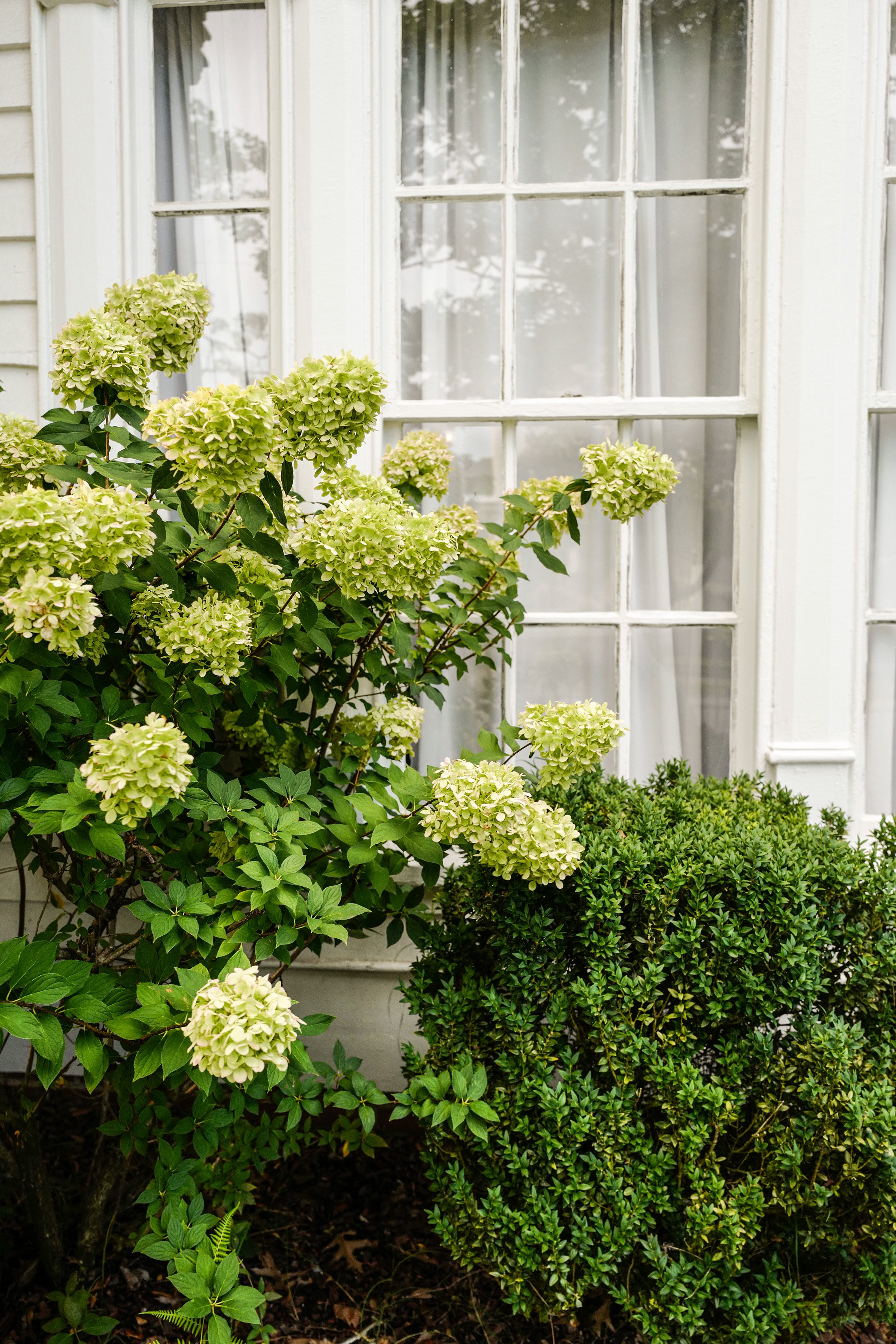
Limelight Hydrangeas Take the Spotlight
The late-summer garden has a way of saving something wonderful for last.
By August the garden has changed its rhythm. The bright, fresh greens of spring have softened, the heat has settled in and more than a few things are beginning to look a little tired.
And then the Limelights arrive.
For most of the summer they are quietly doing their thing… growing taller, filling out, waiting patiently in the background. Then, almost overnight, those enormous pale green blooms begin to open and suddenly they are all you see.
Against the white of a house and the deep green of the boxwoods, I think they're at their very best.
There is something I love about a flower that doesn't need to be precious. Limelight hydrangeas are big, slightly unruly and wonderfully generous. Their blooms begin a fresh chartreuse green, gradually soften toward creamy white and as summer gives way to fall, often take on shades of blush and antique pink.
They're beautiful in the garden, but perhaps even better cut by the armful and brought inside.
A Hydrangea Worth Growing
Limelight is a panicle hydrangea (Hydrangea paniculata), which makes it a little different from the classic blue and pink mophead hydrangeas many of us associate with Southern gardens.
One of the biggest differences and one of the reasons I love them, is that Limelights bloom on new wood. That means the flower buds form on the current year's growth rather than relying on stems that made it through the previous winter.
In practical terms? They're forgiving.
A late frost or an enthusiastic pruning session is much less likely to leave you with a beautiful green shrub and absolutely no flowers.
They are also remarkably adaptable. Limelight hydrangeas are generally hardy in USDA Zones 3–8, making them at home in a much wider range of climates than their lush appearance might suggest.
Where to Plant Them
Give Limelights plenty of room. A mature plant can reach roughly 6–8 feet tall and wide, creating more of a flowering shrub or even a small garden feature rather than a tidy little hydrangea.
They appreciate rich, well-draining soil and consistent moisture, particularly while they're becoming established.
In cooler climates they can happily take quite a bit of sun. In the South, a little protection from the fiercest afternoon heat is welcome. Morning sun with some afternoon shade is a lovely combination.
And unlike bigleaf hydrangeas, you don't need to fuss with the soil pH in hopes of changing their color. Their transformation from green to cream to pink is part of their natural seasonal progression.
When to Prune
This might be my favorite thing about growing Limelights: pruning doesn't have to feel terrifying.
Because they flower on new growth they can be pruned in late winter or early spring, before the year's new growth really gets underway.
I like the idea of pruning with a light hand rather than trying to turn them into perfect little balls. Remove anything dead, damaged or crossing, then shorten the remaining stems as needed to encourage strong new growth.
The goal isn't perfection.
It's that wonderfully loose, overflowing shape that makes a mature hydrangea feel as though it has always belonged exactly where it is.
Cut a Few for the House
And please, cut them!
There is no need to leave every beautiful bloom outside.
I love Limelights gathered simply in a pitcher, an old piece of ironstone or a favorite vase, without much else added. One or two enormous stems can fill an arrangement all on their own.
Later in the season, when the petals begin to feel slightly papery rather than soft and fresh, they're wonderful for drying. Cut them on a dry morning, remove the leaves and arrange them in a vase with just a little water. Let the water evaporate naturally and, more often than not, the flowers will dry right where they are.
Their color fades into the prettiest muted greens and antique blushes. The sort of arrangement that somehow looks even better as autumn arrives.
The Garden in August
Maybe that's what I love most about Limelights.
They don't rush.
Just when the garden feels as though it has already given us its best…the peonies, roses, hydrangeas and all that exuberant early-summer greens… something else steps forward.
Right now, it's these.
Big green-white flowers leaning into the windows, boxwoods spilling beneath them and that particular hazy August light that makes everything feel a little softer around the edges.
I'm trying not to hurry it along.
There will be plenty of time for bulbs and paperwhites and all the things I'm already dreaming about for fall.
For now, the Limelights can have the spotlight.
— Michelle
A Few Notes on Growing Limelights:
Hardiness: Zones 3–8
Light: Full sun to part shade; afternoon protection helpful in hotter climates
Size: Approximately 6–8' tall and wide
Bloom: Mid-summer into fall
Pruning: Late winter/early spring; blooms on new wood
Cut flowers: Excellent fresh or dried